


ISS Previous Year Paper 2019 GS Solution Question 3(c) Universal Basic Income (UBI) in India
ISS Previous Year Paper 2019 GS Solution Question 3(c) Universal Basic Income (UBI) in India. Detailed answer discussing the concept, benefits, challenges, and feasibility of implementing UBI in India.
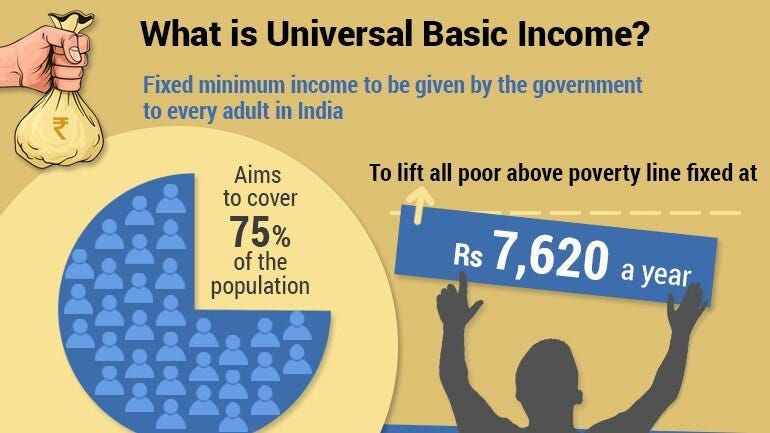
ISS Previous Year Paper 2019 GS Solution Question
Q.3(c) What is Universal Basic Income (UBI)? Discuss its advantages and challenges in the Indian context.
Answer :
Universal Basic Income (UBI) is a system in which all individuals receive a regular cash payment from the government irrespective of their income, employment status, or social background. The objective is to provide a minimum level of economic security to every citizen.
One of the major advantages of UBI is its potential to reduce poverty and income inequality. By providing direct cash support, it can help vulnerable households meet their basic needs and improve living standards.
UBI can also simplify the welfare system by reducing administrative costs associated with multiple subsidy programs. Direct cash transfers may improve efficiency and reduce leakages in welfare delivery.
Another benefit is that UBI provides financial security during periods of unemployment, economic distress, or technological disruptions that may reduce employment opportunities.
However, implementing UBI in India presents significant challenges. The foremost concern is the high fiscal cost, as providing income support to a large population would require substantial government expenditure.
There are also concerns that UBI could reduce incentives to work if not designed properly. Furthermore, replacing existing welfare schemes with UBI may adversely affect vulnerable groups that require targeted support.
Given India's population size and development needs, careful planning, pilot projects, and fiscal sustainability assessments are necessary before large-scale implementation.
Conclusion
Universal Basic Income offers a promising approach to poverty reduction and social security. However, its success in India depends on financial feasibility, effective policy design, and integration with existing welfare programs.
Comments